|
|
| HOME - Community Managed Conservation |
| Community Managed Conservation |
|
|
|
One of the main thrusts of our activities is to encourage forest dwelling communities to demonstrate stewardship in conserving the forests and wildlife that lie within their sphere of influence. These communities understand their ecological environment well and can play a vital role in keeping their heritage intact. By linking the conservation activity with eco-based employment, we aim to create a sustainable conservation model.
Conservation efforts that are not owned by the local communities are less likely to succeed in the long run. With increasing pressure on land, these communities could be misled into alienating their environmental heritage for short-term gains.
|
|
 |
Reforestation |
|
A large part of buffer or reserve forests areas are fairly degraded. These forests lie at the periphery of villages and have sparse forest cover of 20% or less, and excessive grazing by domestic cattle adds to the problem. Reforestation of these lands can improve forest cover and in turn help expand habitats for wildlife and also protect precious migratory corridors. We work closely with Village Forest Committees and EDCs on such initiatives. We use both active reforestation methods e.g. planting of saplings and passive (low-cost) reforestation techniques e.g. support to natural juvenile plants, rain water harvesting trenches, lantana removal, etc. All the activities are carried out by the village communities who gain economically in the process. Our unique model helps bring urban sponsorship for these efforts, making them sustainable in the longer term.
|
|
Rain Water Harvesting |
|
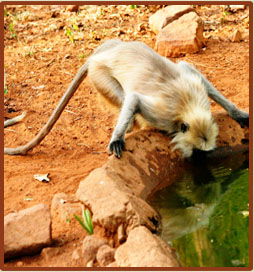
Most forest areas in South India have limited rain cover and remain dry for a large part of the year. Water harvesting helps in improving the water table and in turn foliage health. We work with Village Forest Committees on water harvesting initiatives along afforested areas like water trenches, ponds, low-cost check dams, etc. A big advantage of these efforts is the increased availability of water for wild animals in the dry seasons. Furthermore, the water table in downstream village lands also improves significantly.
|
|
Eco-chulhas |
|
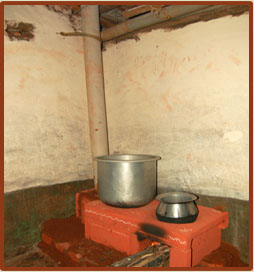
A single traditional chulha consumes around 15 kgs of firewood a day which means over 5 tonnes of wood a year. Multiplied over several homes the numbers are huge. This leads to repeated felling of branches of juvenile trees in the wild, and also creates human-animal conflicts when people go into the forest to gather firewood. The eco-chulhas that we install consume around a third of the firewood (saving 3.5 tonnes firewood per chulha per year, equal to two fully grown trees). More importantly, these run almost entirely on lantana thus helping reduce spread of this invasive weed. Forest forays for firewood collection also come down by 65% and consequently human-animal conflicts greatly reduced. The chulhas are smokeless and take half the normal cooking time, making them a boon for the village women.
|
|
Social Forestry |
|
Encouraging villagers to grow trees on their lands has multiple benefits. It provides them a low-cost option for using their uncultivated lands. The trees provide a variety of eco-services to them e.g. food, fodder, medicines, timber, etc. The availability of fodder facilitates home-fed cattle breeding, reducing the risk of cattle kills by predators. In addition, the trees provide habitats to birds and other forms of wildlife. Apart from providing saplings to the villagers, our social forestry program also includes survival-based incentives to them to encourage them to take good care of the saplings.
|
| |
|
|