| HOME - Eco-Based Livelihoods |
| Eco-Based Livelihoods |
| |
|
One of the main thrusts of our activities is to empower forest dwelling communities to earn their livelihoods through eco-based activities. Our efforts are based on proven success stories in India and abroad, for example
- The innovative initiative in Mangaljodi in Orissa where a group of ex-poachers have been converted into conservationists through a community-based eco-tourism initiative at Chilka lake
- The successes in Periyar and Parambikulam sanctuaries in Kerala where tribal communities have been actively involved in eco-tourism and anti-poaching efforts.
Eco-based employments create a mutual inter-dependence between the forests and the people who live proximate to them. We believe strongly that this creates a win-win situation and a model of conservation that is inclusive and self-sustaining, in addition to building the skills and capabilities of forest dwelling communities.
|
|
 |
Community managed eco-tourism |
|
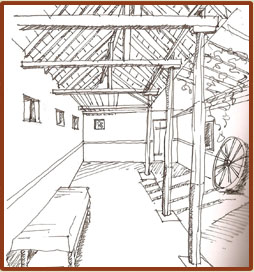
These projects are aimed at empowering village communities start to and run simple eco-tourism activities like tented camps, nature trails, bird-watching trails, day trips to villages, etc. The infrastructure is kept very basic and rudimentary so as to cater only to hard core nature lovers. Visitors eat the food that the locals make and have to respect local culture. In turn, they get to experience village life close to wildlife areas.
|
|
Reforestation |
|
Reforestation of denuded buffer forest areas has a high potential for employment generation while at the same time creating additional forest cover (afforesting 50 acres could generate employment of over 60 man-months). We work with Village Forest Committees in afforesting such lands which mostly lie in core migratory corridors. See web page on Community Managed Conservation for more details.
|
|
Lantana Craft |
|
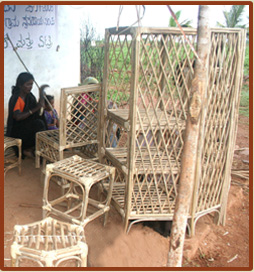
Lantana is an aggressive weed that thwarts other vegetation from growing and hence a major threat to Indian forests. We have been working with ATREE, a Bangalore based NGO, in providing training to tribal communities in making lantana craft items. These activities are ideally suited for women and a crafts person can earn up to Rs 4000 a month from these.
|
|
Bee Keeping |
|
Many tribal communities like Jenu Kurubas have been traditional honey gatherers. However, limitations in collecting honey from the forests have led to many of them abandoning this traditional craft. We train members of such communities to do captive bee keeping and also to market products like honey, bees wax, etc. This activity is in tune with their traditional skill sets and is suited for being done by women. It also helps significantly in maintaining forest health as bees are the single largest pollinators in the wild.
|